

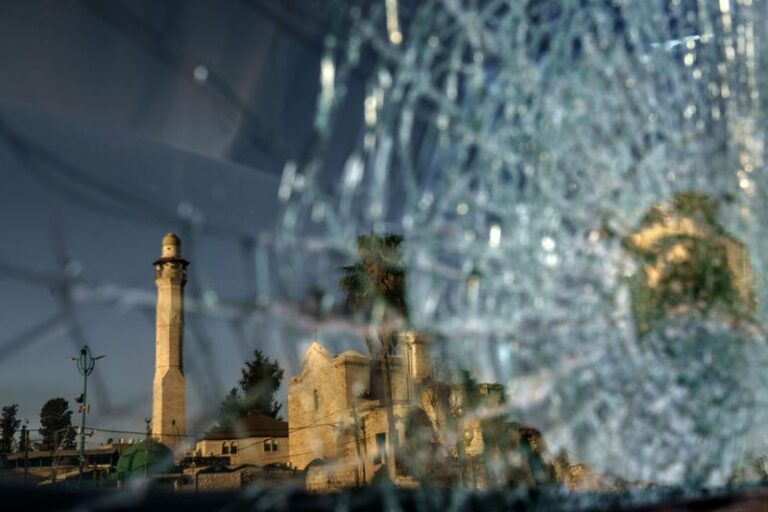

(AP) — Israeli security forces guard the streets of Lod, weeks after rioters torched patrol cars, synagogues and homes. Attackers who killed an Arab and a Jewish resident are still at large. And a mayor whom some blame for setting the stage for some of the worst domestic unrest in Israeli history remains in office.
Israel and Hamas reached a truce two weeks ago to end 11 days of fighting in the Gaza Strip. But the roots of the upheavals that wracked Israel’s mixed Jewish-Arab cities during the war have not been addressed, leaving those communities on edge.
“It’s hard for me to say what tomorrow will be like. To say that I will have the same trust, it’s hard to say,” said Rivi Abramowitz, a Jewish resident of Lod’s predominantly Arab Ramat Eshkol neighborhood.
Lod, about 16 kilometers (10 miles) southeast of Tel Aviv, next to the main international airport, is home to 77,000 people. About a third are Arabs — many of them descendants of Palestinians who formed the majority of the city before a mass expulsion amid the 1948 war around Israel’s creation.
An urban landscape of low-rise housing projects from the 1950s and ’60s, the working-class city also is a bastion of hard-line Jewish politics. In the March 23 election, staunchly nationalist parties, including Prime Minister Benjamin Netanyahu’s Likud party, won more than 60% of the vote in Lod.
Any tensions were largely below the surface — until last month.
Clashes between Jerusalem police and Palestinian protesters in and near the Al-Aqsa Mosque, one of Islam’s holiest sites, and the planned eviction of Palestinians from homes in an east Jerusalem neighborhood drove some Arab residents of Lod into the streets in protest.
On the night that war began between Israel and Hamas, the shooting of an Arab man by a Jewish resident of Lod touched off over a week of violence, and the city was placed under a state of emergency.
Similar disturbances, fueled by longstanding Arab grievances over discrimination and lack of opportunities, quickly spread to other mixed areas across the country.
In Lod, two residents were killed: Musa Hassuna, 32, by a suspected Jewish gunman, and Yigal Yehoshua, 56, by a suspected group of Arab attackers. No charges have been filed in either case, and police say investigations are ongoing.
Some Arab residents point to the election of Mayor Yair Revivo eight years ago as a turning point. Revivo has close ties with a religious nationalist movement known as the “Torah Nucleus,” which promotes what it calls Jewish values in impoverished cities.
Critics say Revivo, a member of Likud, has incited hate against Arabs, advanced discriminatory policies and empowered the Torah Nucleus in harmful ways. The group’s presence in Lod goes back some 25 years, but its numbers have swelled from two founding families to over 1,000 families today.