

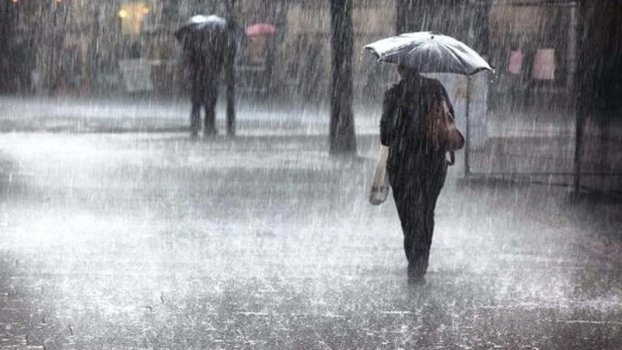

Meteorologists have said that enough rain has not yet occurred in any part of the country since the onset of monsoon for this season on June 5.
“This is happening because the country’s monsoon phenomena have proven to be weak as the monsoon trough, which is responsible for causing normal to heavy rain, has not become active, and it is still lying in the low atmospheric pressure of the southern region of Nepal,” Ganga Nagarkoti, a meteorologist at the Meteorological Forecasting Division under the Department of Hydrology and Meteorology, said.
“A low atmospheric pressure or low-pressure line is still in the south of New Delhi to the Bay of Bengal, and unless the low pressure rises from India’s low-pressure belt, Nepal’s major region will not receive expected rainfall although it has already been 43 days since monsoon entered Nepal,” Nagarkoti said.
People start feeling scorching heat when the sky in the monsoon time becomes clear without any rain-causing clouds as the earth is closer to the sun in monsoon, she said.
In the Kathmandu Valley, the maximum temperature was recorded at 32.3 degrees Celsius on Sunday. It is the highest temperature of this year’s monsoon season for Kathmandu, Nagarkoti said. Likewise, the highest maximum temperature across the country was recorded at Dumkauli of Nawalpur station at 39.8 Degrees Celsius on Sunday.
In the last 24 hours, no region of the country received more than nine mm rainfall, although some areas in Kathmandu received rainfall in the afternoon on Monday.
“There is a possibility of relief for a few days from the scorching heat from Tuesday to Thursday as many parts of the country are expected to get continuous rains,” meteorologist Hira Bhattarai said.
Bhattarai said that rain is likely to occur in more places on Tuesday and Wednesday than on Monday.
“There will be rain in Sudurpaschim, Karnali, Gandaki and Lumbini provinces on Tuesday,” Meteorologist Bhattarai said, “area coverage will increase further on Wednesday.”
According to meteorologist Bhattarai, districts like Kathmandu, Palpa, Tanahun, Makwanpur, Ilam and Jhapa received rainfall on Monday.
People have been experiencing scorching heat every day as the monsoon system has become weak in the country and instead of continuous or widespread rain, only partial to sporadic rainfalls are occurring in several districts, Bhattarai said.
From India’s low-pressure belt, the monsoon trough has not been able to rise while entering Nepal’s territory and that is why it is feeling hot during the daytime, Bhattarai said.
Normally, during the monsoon season, our sky is covered with the monsoon cloud and people either experience rain or a cool situation, but our sky became completely clear on Sunday in Kathmandu, thus people felt hot and the maximum temperature reached 32.3 Degrees Celsius,” Meteorologist Bhattarai said.
On Monday around 6 am, there was light to moderate rainfall in a few places in Province 1, Bagmati and Gandaki provinces and one or two places in Karnali province.
Senior Meteorologist Min Kumar Aryal, who is currently at the Office of Hydrology and Meteorology in Pokhara as station manager, talking over the telephone on Monday, said that the DHM could not provide exact rainfall details as it is measured and calculated separately after receiving rainfall record from all the stations.
“There are over 300 rainfall measuing stations across the country. And so far, the DHM has received daily rainfall update only from 234 stations or even less than this,” Aryal said. “We are currently providing only daily rainfall records after receiving the data from the available stations,” he said.
Source : TRN,
